
Project guidance
Exterior paint, weathering & moisture
Peeling paint is a starting point for an inspection, not a diagnosis. Before repainting a Richmond exterior, describe where the failure occurs, what lies beneath it and whether the condition is still changing. This is particularly useful for a property close to the river, where exposure deserves careful assessment.
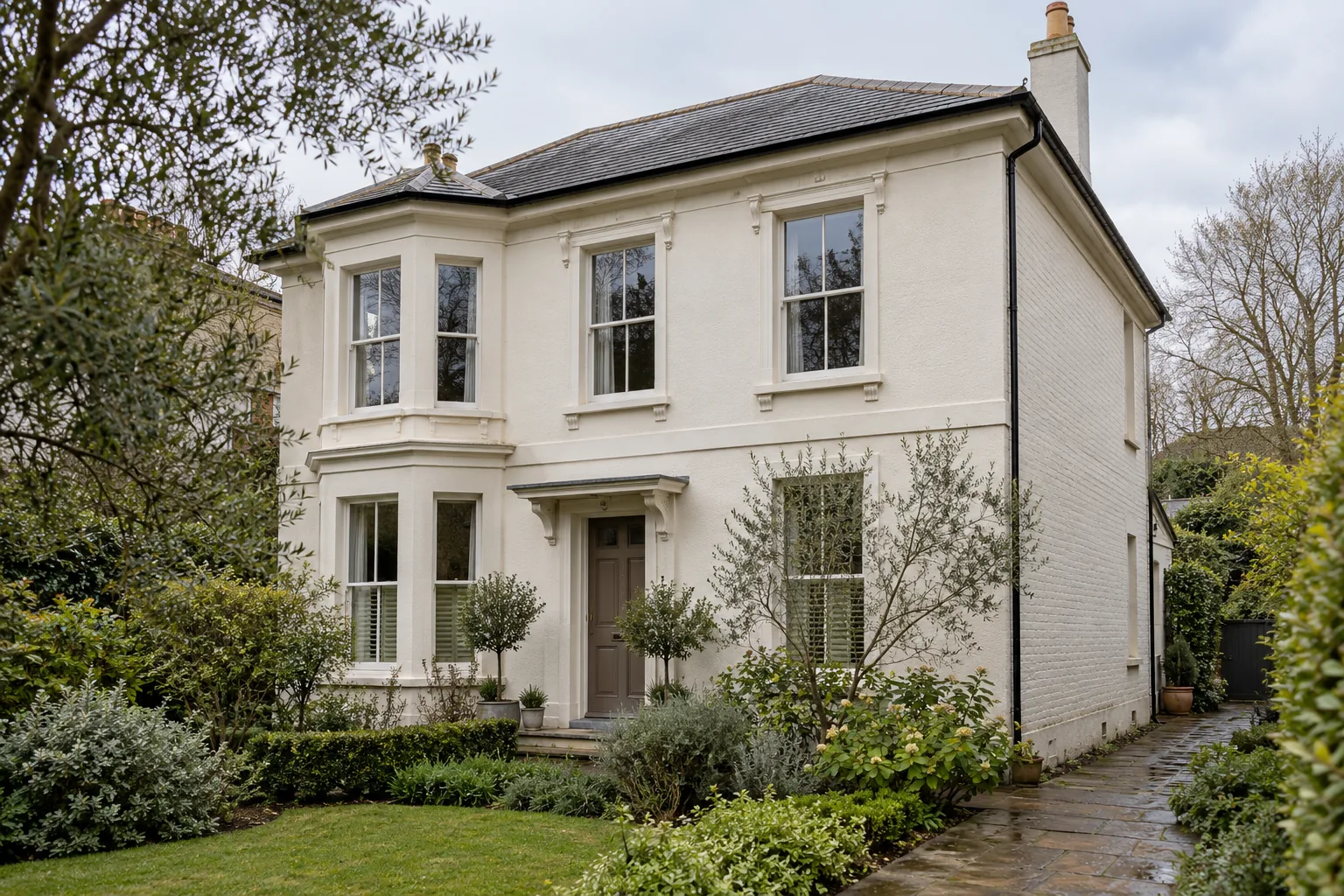
Record the pattern of the failure
Photograph the whole elevation before taking close views of cracks, blisters and stained areas. Note which face receives weather, where water has been seen after rain and whether an earlier repair changed the problem. Historic England's moisture guidance supports investigation of causes before selecting treatment. A riverside address alone cannot explain the condition of a wall.
Sources: Historic England: investigating moisture in traditional buildings
Identify render, stucco and masonry separately
Traditional building materials can absorb and release moisture. Their finish therefore needs to be considered with the wall construction and existing coatings. Record changes between render, brick, stone and repair patches, and obtain advice where their composition is uncertain. A single colour across an elevation does not mean that one preparation or paint system is appropriate for every part.
Sources: Historic England: properties of traditional building materials
Do not make the paint carry the repair brief
List investigations and repairs that must be completed before the decorating stage. That may include checking a suspect gutter, a sill junction or damaged timber, with the relevant work separately assessed. Agree who confirms that a surface is ready for decoration. Where the cause of staining remains uncertain, record the hold point instead of allowing the problem to disappear under a new coat.
Sources: Historic England: investigating moisture in traditional buildings
Choose the coating for the material
Historic England notes that lime render and stucco may require permeable finishes, and warns against inappropriate painting of masonry. Seek a product specification for the actual substrate and previous coating. Include sample preparation and any compatibility checks in that decision. For an older painted wall, a more robust-looking film is not a substitute for understanding how the wall handles moisture.
Give the elevation a realistic working window
Review the selected manufacturer's application and drying requirements alongside the access arrangements. Keep a record of the approved product, finish and colour for each element. Inspect the work from close range and from the normal approach to the property, including window edges, door returns and rendered details. Future maintenance is easier to discuss when the completed specification and any unresolved defects are recorded clearly.
A repaint in Richmond
Your home.
Your next project.
Share the changes you have in mind for your house or flat. We can discuss the extent of the painting, the finishes you want to retain and how the work might fit around occupation.
Tell us about your property
Include the Richmond address, the areas to repaint and any dates that matter to you.